

A sand dryer, also known as a river sand dryer, yellow sand dryer or quartz sand dryer, is a drying device designed for processing large quantities of materials. It features reliable operation, high operational flexibility and strong adaptability. Ideal for granular materials, it delivers excellent drying results especially for sand, river sand, quartz sand and similar materials. Now, what power-saving measures can be adopted for the operation of sand dryers? Here we will give a brief introduction, hoping to be helpful for your daily operation of sand dryers.
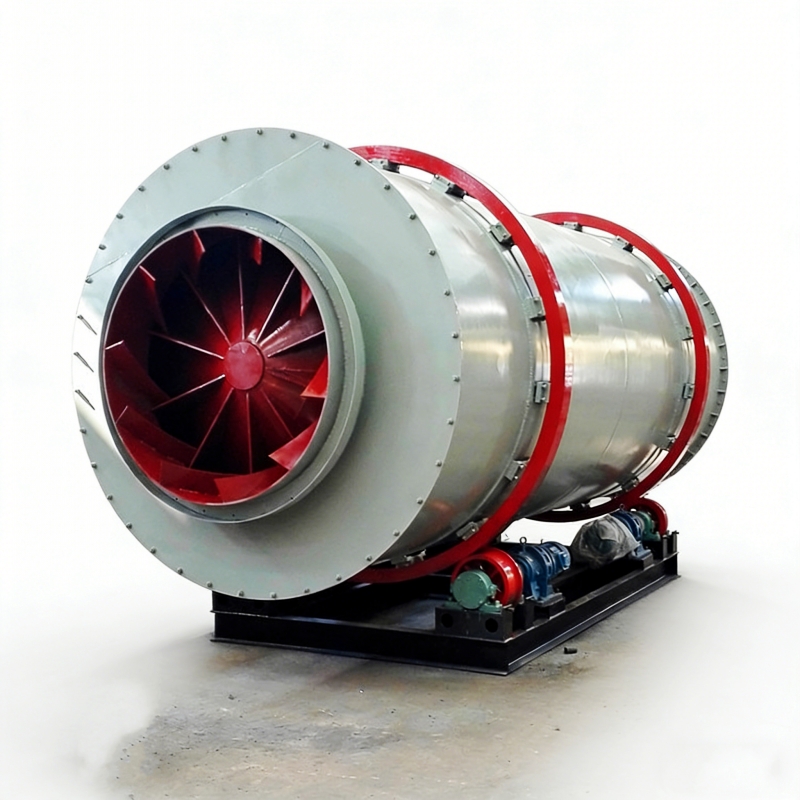
Sand dryers are generally of the rotary drum type, which consume a relatively large amount of electricity. Users can cut down a lot of production costs by adopting reasonable power-saving measures. The typical power consumption of a dryer is calculated by multiplying the motor power by 3/4. A dryer is usually equipped with two fans; the power consumption of the fans is calculated by multiplying the fan power by two, then by operation time and 3/4. The total power consumption of the dryer is the sum of the motor and fan power consumption. A frequency converter can be installed to control the rotation speed of the fans and motor, thus saving electrical energy.
Optimize the spiral conveying blades at the feeding end by removing the triangular rib plates. You can make new blades with 6mm steel plates, with the height of the short right-angle side equal to that of the retaining ring at the feeding end. Weld the blades firmly to the inner cylinder of the dryer and place a weld every 50mm, which will naturally form a conical propeller. This design slows down the flow rate of materials in the high-temperature zone, improves the heat exchange efficiency and reduces the temperature at the front end of the dryer.
For the L-shaped lifting plates located at the low-temperature zone (about 1/3 of the cylinder length) of the sand dryer, the lifting plates are usually fixed at a vertical 90° angle. Instead, they can be welded at alternating angles of 30°, 90° and 120° around the circumference. Such an arrangement can enhance the heat exchange efficiency through the rotation of the dryer’s lifting plates.