

Improving the drying efficiency of a coal slime dryer requires coordinated efforts across four dimensions: feed pretreatment, equipment operating parameter optimization, thermal system regulation, and daily maintenance. The core objective is to enhance heat and mass transfer efficiency while reducing energy loss.
First, conduct thorough feed pretreatment. Excessively high initial moisture content of coal slime tends to cause caking. It is necessary to use crushing and dispersing equipment to control the particle size of coal slime within 5–10 mm. Meanwhile, adopt a conditioning process by adding an appropriate amount of dispersants such as bentonite to prevent the formation of “wall-adhered lumps” inside the cylinder, ensuring full contact between materials and hot air flow.
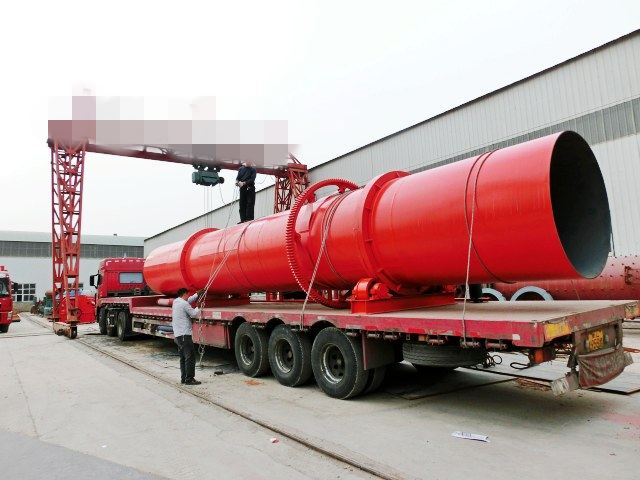
Second, optimize equipment operating parameters. Adjust the drum rotation speed to 0.8–1.2 r/min to match the material residence time inside the cylinder with the drying cycle. Control the feed rate reasonably to avoid reduced hot air flow velocity caused by overload operation; generally, maintain the material layer thickness at 50–80 mm to ensure smooth ventilation.
Third, strengthen thermal system regulation. When high-temperature flue gas is used as the heat source, stabilize the hot air temperature at 350–450℃. Meanwhile, optimize the fan pressure and air volume to maintain a slight negative pressure inside the cylinder (with the negative pressure value controlled at -50 to -100 Pa), accelerating the discharge of humid hot air. A waste heat recovery device can be installed to reuse tail gas heat for preheating cold air, thereby improving thermal energy utilization efficiency.
Fourth, enhance daily maintenance management. Regularly clean the material deposits on the inner wall of the drum and dust accumulation on the lifting plates, and inspect the welding firmness of the lifting plates to ensure their normal material guiding and lifting functions. Replace damaged sealing components in a timely manner to reduce hot air leakage and minimize heat loss.
Through the above measures, the drying efficiency of the coal slime dryer can be effectively improved by 15%–25%, while reducing unit energy consumption to achieve efficient and energy-saving operation.